Classic Beef Stew (Fork-Tender and Easy)
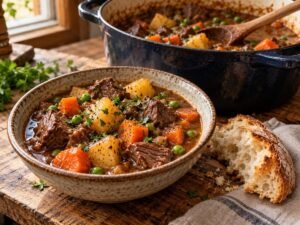
There’s a point every fall when I stop wanting anything quick and start wanting a pot of something on the stove all afternoon. This beef stew is that pot. Big pieces of beef that fall apart when you press them with a spoon, potatoes and carrots soaked in a dark, savory gravy, and a kitchen that smells incredible for hours.
It’s not complicated. Most of the time is hands-off simmering. What makes it taste like it took all day are a few small steps that are easy to rush: drying the beef, browning it in batches, and cooking the tomato paste until it darkens. Do those, and the rest takes care of itself.
Ingredient notes

- Beef chuck. This is the cut you want. It’s marbled with fat and connective tissue that melts during the long simmer and turns the meat tender and juicy. Lean cuts like sirloin dry out and get tough. I buy a whole chuck roast and cut it myself, because packaged “stew meat” is often a mix of cuts that cook unevenly.
- Tomato paste. Just two tablespoons, but it adds depth and a little sweetness. Cook it until it turns a shade darker before adding liquid.
- Beef broth and balsamic vinegar. An extra cup of broth deglazes the pot, and a tablespoon of balsamic vinegar adds the gentle tang and depth that make the gravy taste slow-simmered.
- Low-sodium broth. The stew reduces for hours, so regular broth can end up too salty. Season at the end instead.
- Yukon Gold potatoes. They hold their shape and turn creamy inside. Russets fall apart and make the gravy cloudy.
New to slow cooking? This guide on how to use a slow cooker covers LOW vs HIGH, layering, cooking times and food safety.
Helpful tools for this recipe
- Large Dutch oven (5 to 7 quarts): a heavy pot browns the beef well and holds a steady, gentle simmer.
- Instant-read thermometer: for checking leftovers are reheated to 165°F.
This post contains affiliate links. As an Amazon Associate I earn from qualifying purchases.
How to make beef stew
1. Dry and season the beef. Pat the cubes really dry with paper towels. Wet meat steams instead of browning. Season with salt and pepper, then toss with a light coat of flour. The flour helps the beef brown and later thickens the gravy, so you don’t need a separate thickener.
2. Brown in batches. This is the step that makes the stew. Heat a little oil in a heavy Dutch oven until it shimmers, then add just enough beef to cover the bottom with space between the pieces. Leave it alone for a couple of minutes before turning. You want a deep brown crust, not gray meat. It takes three batches, and yes, it’s worth it. Crowding the pot drops the temperature and the beef stews in its own juices instead of browning.

3. Build the base. Lower the heat and add the onion to the same pot. As it softens, it releases moisture that helps you scrape up all the browned bits from the bottom. Those bits are pure flavor. Then add the garlic and tomato paste and stir until the paste looks a shade darker and smells sweet.
4. Deglaze with broth. Pour in 1 cup of the beef broth and the balsamic vinegar and let it bubble for a few minutes while you scrape the bottom of the pot clean. All those browned bits melt into the gravy and give it deep, beefy flavor.
5. Simmer low and slow. Add the broth, Worcestershire, thyme and bay leaves, then return the beef. Bring it to a gentle simmer, cover, and cook on low for an hour and a half. You’re looking for small, lazy bubbles, not a rolling boil. Boiling tightens the meat and makes it tough. If your stovetop runs hot, put the covered pot in a 325°F (165°C) oven instead.
6. Add the vegetables. Adding the potatoes and carrots halfway through keeps them from turning to mush. Cover and simmer for another 45 to 60 minutes. The stew is ready when a piece of beef breaks apart easily with a fork. If it still resists, give it more time. Chuck needs patience.
7. Finish and taste. Stir in the peas for the last few minutes, fish out the bay leaves, and taste. This is when you add salt. Long-simmered stews usually need a little more than you’d expect. A handful of chopped parsley brightens it up at the end.
Tips for the best beef stew
- Tough beef? It almost always needs more time, not less. Keep simmering gently and check every 15 minutes.
- Thin gravy? Simmer with the lid off for 10 to 15 minutes, or stir in a cornstarch slurry (details in the recipe notes).
- Bland flavor? Add salt a pinch at a time, plus a splash of Worcestershire or a teaspoon of balsamic vinegar to wake it up.
- Make it a day ahead. Stew really does taste better the next day. As a bonus, the fat rises and firms up in the fridge, so it’s easy to lift off.
What to serve with beef stew
Crusty bread or warm biscuits for the gravy are a must. A simple green salad with a sharp vinaigrette balances the richness. If you’re in a cozy-dinner mood, my easy chicken pot pie is another family favorite for cold nights, and for dessert, a warm square of apple cake never goes wrong.
Storing, freezing and reheating
Let the stew cool, then refrigerate it in airtight containers for up to 4 days. To freeze, portion it into freezer-safe containers, leaving a little room at the top, and freeze for up to 3 months. The potatoes get a little softer after freezing, but the flavor holds up well.
Reheat on the stove over medium-low heat, adding a splash of broth if it’s thickened, and bring it until it’s steaming hot all the way through. The FoodSafety.gov chart recommends reheating leftovers to 165°F (74°C).
Serve the stew over a scoop of creamy make-ahead mashed potatoes.
For another hearty one-dish dinner, make this shepherd’s pie with ground lamb.
Looking for more cozy ideas? Browse these 10 warming fall dinner recipes.
Beef stew questions
Can I make beef stew in a slow cooker?
Yes. Brown the beef and build the base on the stove first (steps 1 to 4), because that’s where the flavor comes from. Then move everything, including the vegetables, to a slow cooker and cook on low for 8 hours or high for 4 to 5 hours.
Why is my stew meat tough?
Either it hasn’t cooked long enough or it boiled too hard. Chuck goes through a tough stage before the connective tissue breaks down. Keep it at a gentle simmer and give it more time.
Can I use a different cut of beef?
Bottom round or brisket work, but chuck is the most forgiving and the most tender. Avoid lean steaks like sirloin for stew.
If you make this, leave a comment and a star rating. And tell me: bread or biscuits on the side?

Classic Beef Stew
Ingredients
Method
- Pat the beef very dry with paper towels. Season with the salt and pepper, then toss with the flour until lightly coated.
- Heat 1 tablespoon of oil in a large Dutch oven over medium-high heat. Brown the beef in 3 batches, about 4 to 5 minutes per batch, turning until well browned on several sides. Add more oil between batches as needed and move the browned beef to a plate.

- Lower the heat to medium. Add the onion and cook for 5 minutes, scraping up the browned bits. Add the garlic and tomato paste and stir for 1 to 2 minutes, until the paste darkens.
- Pour in the extra beef broth and the balsamic vinegar and simmer, scraping up the browned bits from the bottom of the pot, for 3 to 4 minutes.
- Add the broth, Worcestershire sauce, thyme and bay leaves. Return the beef and any juices to the pot. Bring to a simmer, cover, and cook on low heat for 1 1/2 hours, stirring occasionally. (Or cover and bake at 325°F / 165°C.)
- Add the potatoes, carrots and celery. Cover and simmer for 45 to 60 minutes more, until the beef is fork-tender and the vegetables are soft.
- Stir in the peas for the last 5 minutes. Remove the bay leaves, taste and adjust the salt and pepper, and sprinkle with parsley before serving.
Notes
- Deeper flavor: stir in 1 teaspoon of Worcestershire sauce at the end for extra savory depth.
- Thicker gravy: stir 1 tablespoon cornstarch into 2 tablespoons cold water and simmer it into the stew for 2 minutes.
- Slow cooker: after step 4, move everything to a slow cooker with the vegetables and cook on low for 8 hours or high for 4 to 5 hours.
- Storage: refrigerate up to 4 days or freeze up to 3 months. Reheat until steaming hot throughout.