New York Cheesecake Recipe
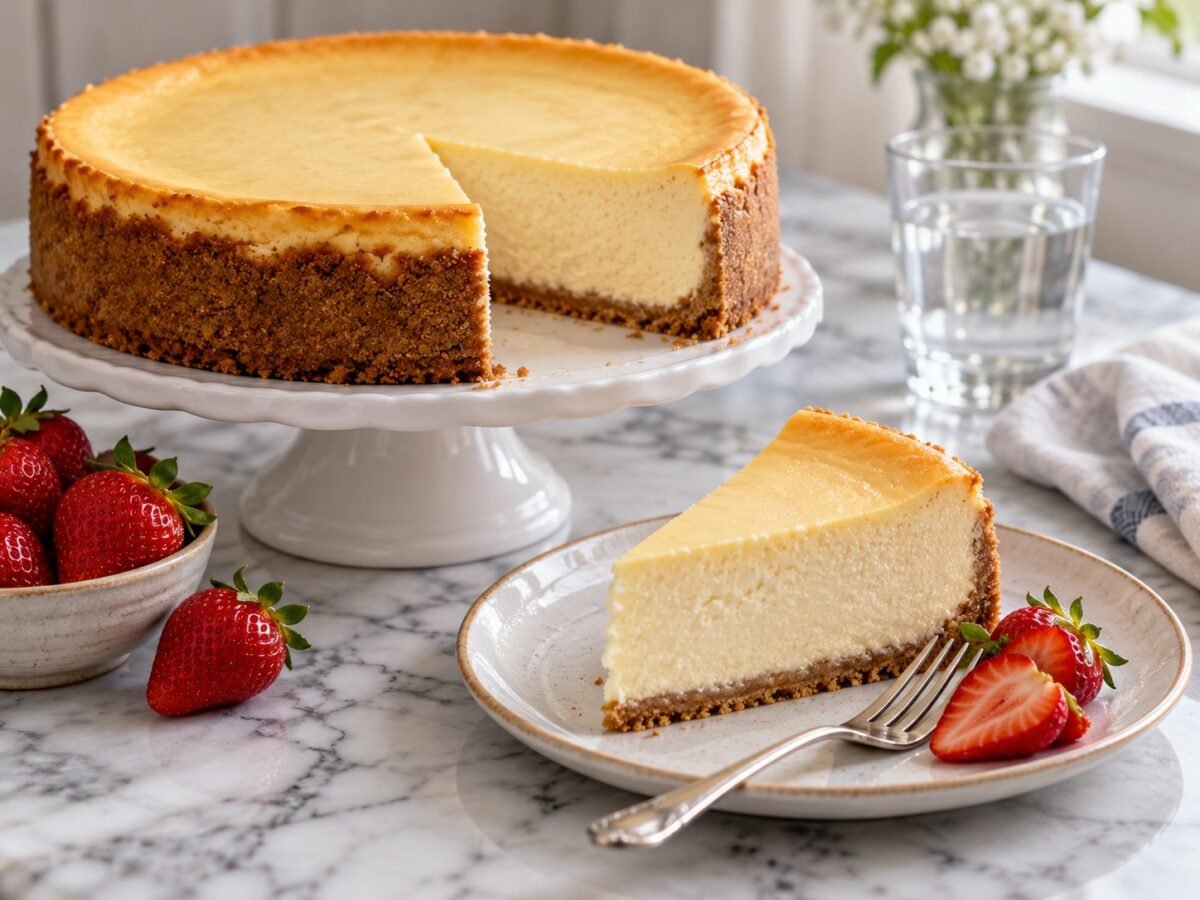
This New York cheesecake is everything a classic cheesecake should be: tall, dense and ultra-creamy, with a rich tangy flavor and a buttery graham cracker crust. Baked low and slow in a water bath, it comes out with a smooth, pale top and a velvety texture from edge to center.
This New York cheesecake recipe takes a little patience, since it needs to chill overnight, but the hands-on work is simple. Follow a few key tips and you will get a bakery-worthy cheesecake with no cracks, no lumps and no soggy crust.
What makes a New York cheesecake different?
New York style cheesecake is denser and richer than other cheesecakes. It uses plenty of full-fat cream cheese, a little flour for structure and sour cream for tang, with no gelatin and no whipped topping. The result is a thick, creamy slice that holds its shape, compared with lighter, fluffier styles.
Why you’ll love this New York cheesecake
- Rich and creamy. Five packages of cream cheese give that classic dense, silky texture.
- Crack-free top. A gentle water bath and slow cooling keep the surface smooth.
- Make-ahead friendly. It has to chill overnight, so it is perfect for holidays and parties.
- No gelatin, no alcohol. Just cream cheese, sugar, eggs, sour cream, lemon and alcohol-free vanilla.
Ingredients for New York cheesecake
For the crust you need graham cracker crumbs, sugar, melted butter and a pinch of salt. For the filling you need full-fat brick cream cheese, sugar, flour, salt, sour cream, vanilla, lemon zest, lemon juice, eggs and an extra yolk. Exact amounts are in the recipe card below.
Ingredient notes
- Cream cheese: use full-fat cream cheese sold in bricks, not the tub kind, which has added air and water. Let it sit out for 2 to 3 hours until very soft.
- Sour cream: adds tang and creaminess. Full-fat gives the best texture.
- Flour: just 3 tablespoons help the cheesecake set and make it less likely to crack.
- Eggs: room-temperature eggs blend in quickly, so you don’t overmix and whip in air.
- Vanilla: use an alcohol-free vanilla or vanilla bean paste.

Helpful tools for this recipe
- 9-inch springform pan: a sturdy, leakproof pan with 3-inch sides holds the tall filling.
- Large roasting pan: big enough to hold the springform and the water bath.
- Hand or stand mixer: beats the cream cheese perfectly smooth on low speed.
This post contains affiliate links. As an Amazon Associate I earn from qualifying purchases.
How to make New York cheesecake
1. Make the crust. Heat the oven to 350°F. Wrap the outside of a 9-inch springform pan in two layers of heavy-duty foil to keep the water bath out. Stir together the graham cracker crumbs, sugar, melted butter and salt, then press firmly into the bottom and about 1 inch up the sides of the pan. Bake for 10 minutes and let it cool. Lower the oven to 325°F and put a kettle of water on to boil.
2. Beat the cream cheese. Beat the cream cheese on low speed for 2 to 3 minutes until completely smooth, scraping the bowl and beater often. Add the sugar, flour and salt and beat on low until smooth. Beat in the sour cream, vanilla, lemon zest and lemon juice.
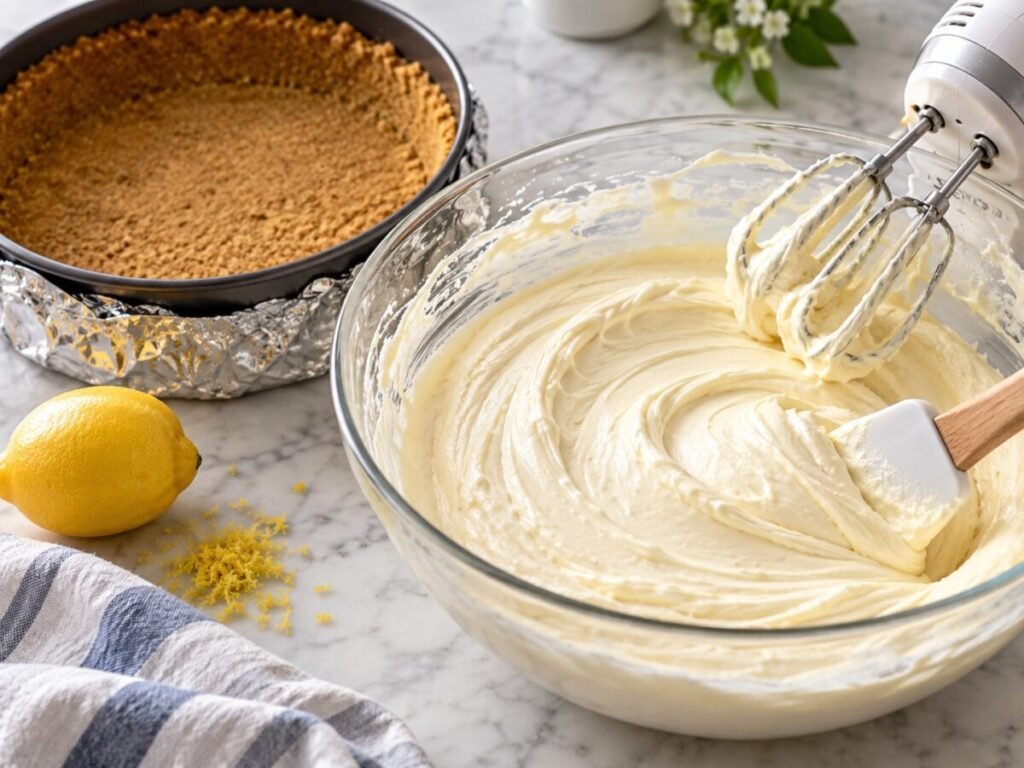
3. Add the eggs. Add the eggs and the extra yolk one at a time on low speed, mixing only until each one disappears. Overbeating at this stage whips air into the batter, which causes puffing and cracks.
4. Set up the water bath. Pour the filling into the cooled crust, smooth the top and tap the pan on the counter a few times to release air bubbles. Set the springform in a large roasting pan, place it on the oven rack and carefully pour hot water into the roasting pan until it comes halfway up the sides of the springform.
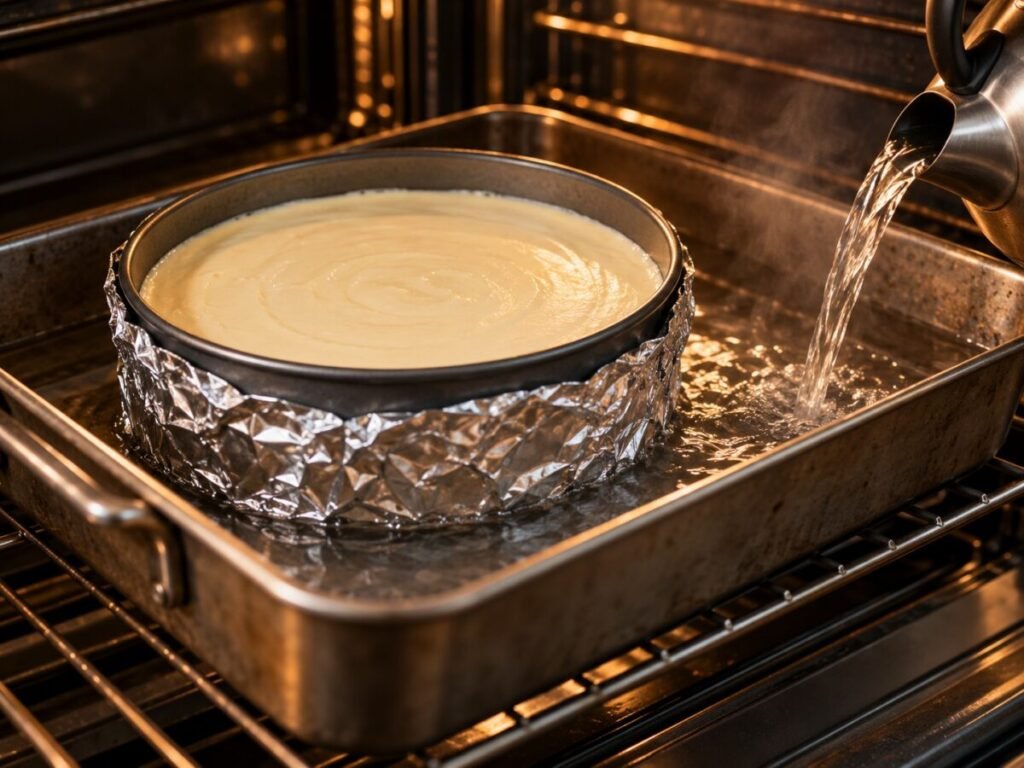
5. Bake low and slow. Bake for 75 to 85 minutes, until the edges are set and slightly puffed and the center 2 to 3 inches still jiggle like gelatin when you gently nudge the pan. Turn off the oven, prop the door open a few inches and leave the cheesecake inside for 1 hour.
6. Cool and chill. Lift the cheesecake out of the water bath and remove the foil. Run a thin knife around the edge so the cheesecake can pull away from the pan as it shrinks. Cool to room temperature, then refrigerate for at least 8 hours or overnight. Slice with a long knife dipped in hot water and wiped dry between cuts.
How to prevent cracks in cheesecake
- Use room-temperature ingredients. Cold cream cheese stays lumpy, so you end up overmixing.
- Mix on low speed. High speed beats in air that makes the cheesecake rise and then sink and crack.
- Bake in a water bath. The steam keeps the oven moist and the gentle heat cooks the custard evenly.
- Don’t overbake. The center should still wobble. It firms up completely as it chills.
- Cool slowly. Sudden temperature changes make the cheesecake contract too fast and split.
If a small crack does appear, don’t worry. A spoonful of fruit sauce or a swirl of whipped cream hides it beautifully.
Topping ideas
A classic New York cheesecake is wonderful plain, but you can dress it up with fresh strawberries, a cherry or blueberry sauce, salted caramel, chocolate ganache or a dusting of cinnamon sugar with sauteed apples in the fall.
Storing and freezing
Cheesecake is a dairy-and-egg dessert, so keep it refrigerated. Cover and store it in the fridge for up to 5 days, following FoodSafety.gov’s cold storage chart. To freeze, chill it completely, then wrap the whole cake or individual slices tightly in plastic wrap and foil and freeze for up to 2 months. Thaw overnight in the fridge.
More cheesecake desserts
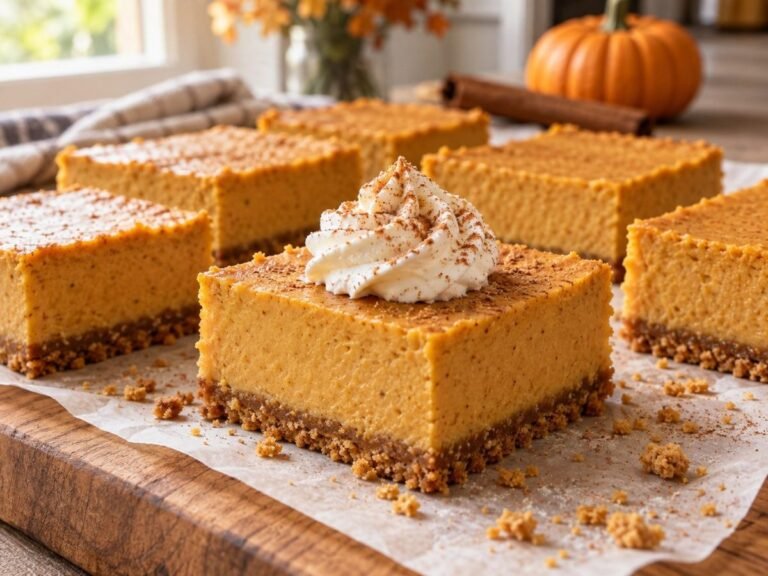
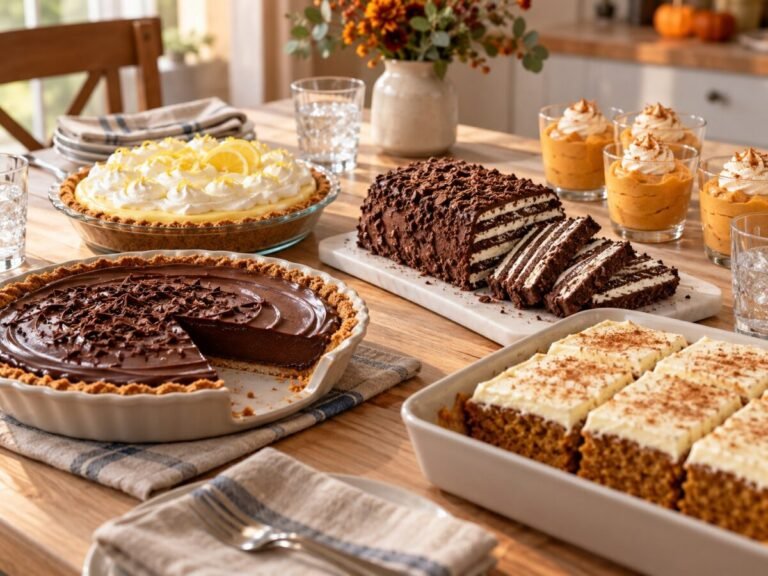
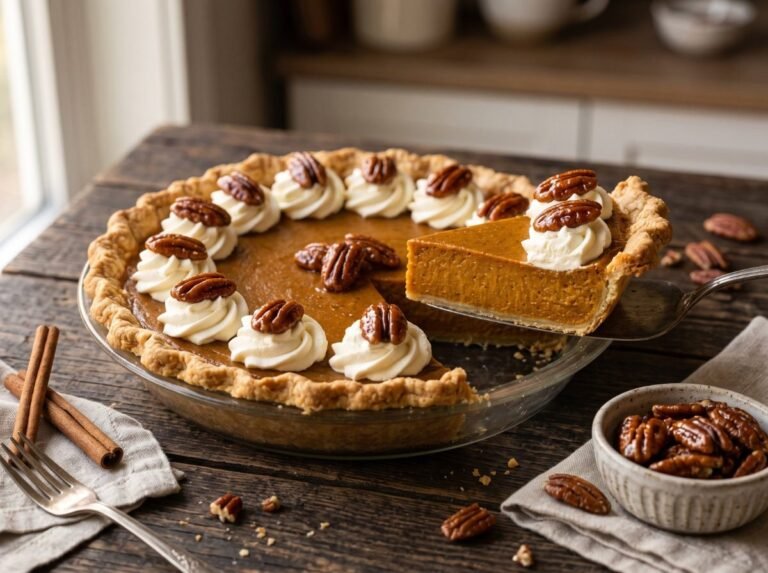
Craving more creamy desserts? Try our caramel apple cheesecake bars or spiced pumpkin cheesecake bars. Planning a holiday dessert table? Pair this cheesecake with a classic pecan pie and pumpkin pie.
New York cheesecake FAQ
How do I know when the cheesecake is done?
The edges should look set and slightly puffed, while the center 2 to 3 inches wobble gently when you nudge the pan. An instant-read thermometer in the center should read about 150°F.
Can I make New York cheesecake without a water bath?
Yes. Place a pan of hot water on the rack below the cheesecake instead. The steam still helps, though the edges may be a little firmer and the top more likely to crack.
Why is my cheesecake lumpy?
Lumps come from cold cream cheese. Let it soften completely, and beat it alone until perfectly smooth before adding anything else.
Can I use low-fat cream cheese?
For a true New York style cheesecake, stick with full-fat. Lower-fat cream cheese makes a softer, wetter cheesecake that doesn’t slice as cleanly.
How far ahead can I make cheesecake?
Up to 3 days ahead for serving, and it tastes even better the second day. For longer, freeze it.
If you bake this New York cheesecake, leave a comment and a star rating below. Plain or with strawberries on top?
Want another creamy dessert that chills overnight but needs no oven at all? Try this easy tiramisu recipe with coffee-dipped ladyfingers and a fluffy mascarpone cream.
Don’t want to turn on the oven? Try our no-bake salted caramel cheesecake, with a cookie crust and homemade caramel and no water bath. Know a cheesecake fan? Our gifts for bakers guide has ideas for every budget.
New York Cheesecake
Ingredients
Method
- Heat the oven to 350°F. Wrap the outside of a 9-inch springform pan in two layers of heavy-duty foil. Mix the crumbs, sugar, butter and salt, press into the bottom and 1 inch up the sides, and bake 10 minutes. Cool, and lower the oven to 325°F.
- Beat the cream cheese on low speed until completely smooth, 2 to 3 minutes. Beat in the sugar, flour and salt, then the sour cream, vanilla, lemon zest and lemon juice, scraping the bowl often.
- Add the eggs and yolk one at a time on low speed, mixing just until each disappears. Do not overmix.
- Pour the filling into the crust and smooth the top. Set the pan in a large roasting pan and pour hot water into the roasting pan to come halfway up the sides of the springform.
- Bake 75 to 85 minutes, until the edges are set and the center 2 to 3 inches still jiggle slightly. Turn off the oven, crack the door and leave the cheesecake inside for 1 hour.
- Remove from the water bath, run a thin knife around the edge and cool to room temperature. Refrigerate at least 8 hours or overnight before slicing with a hot, clean knife.